

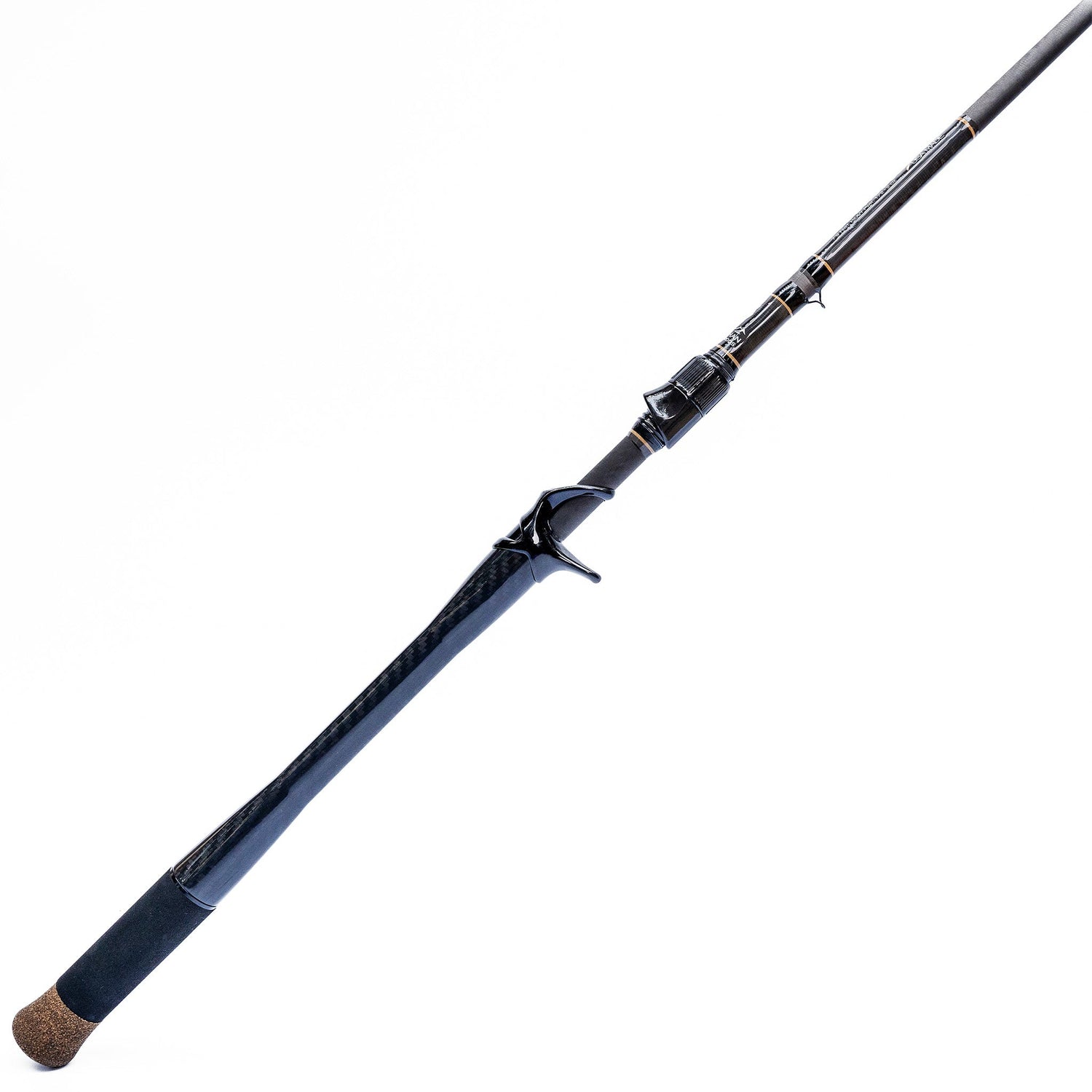
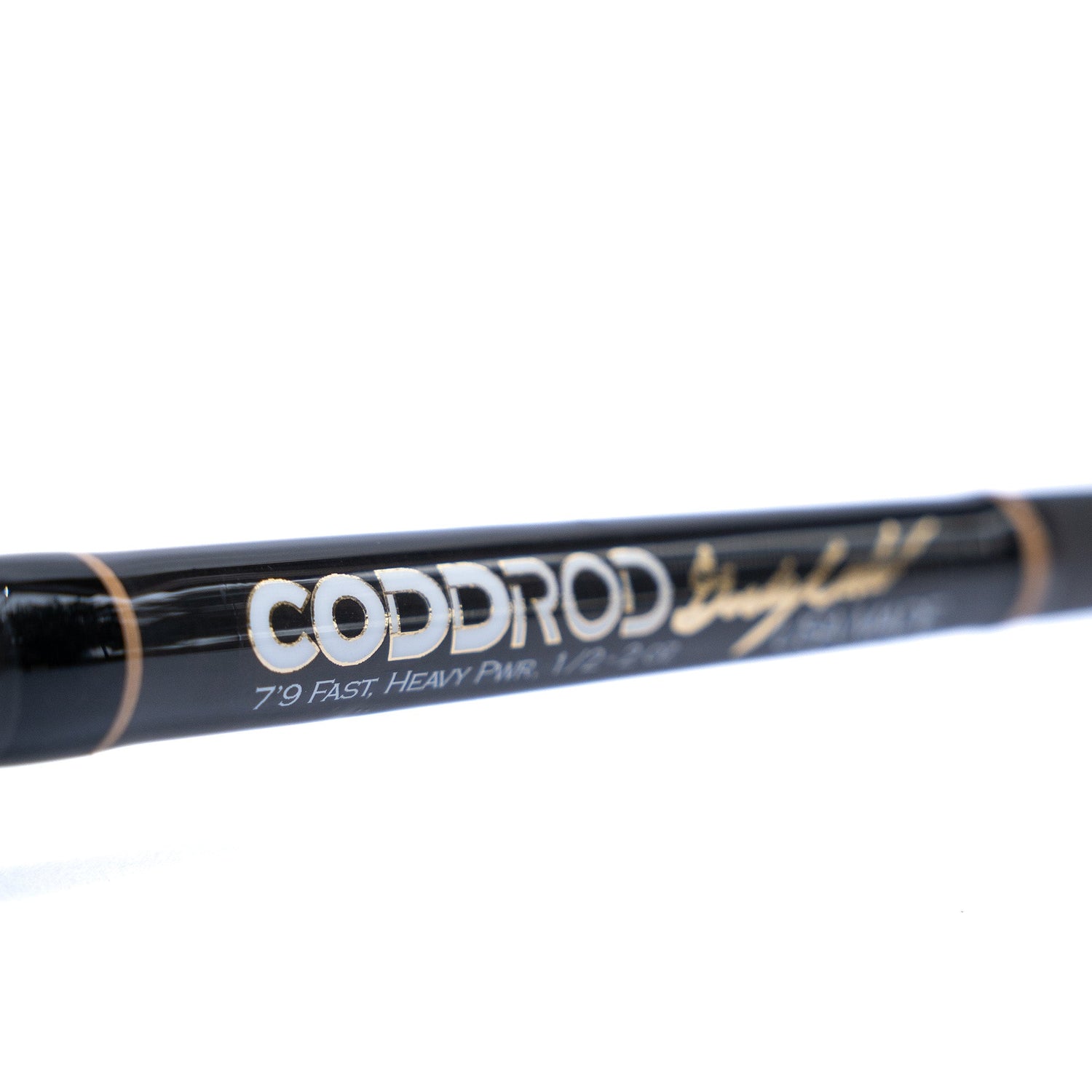
CoddRod Swimbait Rod 7'7" Heavy Fast ½-2 oz
Designed for ½–2oz swimbaits with added stability and control under load for technical and versatile applications.
- ½–2oz swimbaits
- 150-200 size reels (Curado / Tatula / Bates O.G. / Bates Hundo)
- 10–20lb mono, 15–25lb fluoro, or 30-50lb braid
- GDW G-Flag 175 / GDW Flag 255
- Parker Mini Magnum Flutter Spoon
- 6” Magdraft
- Out of stock
CoddRod Swimbait Rod
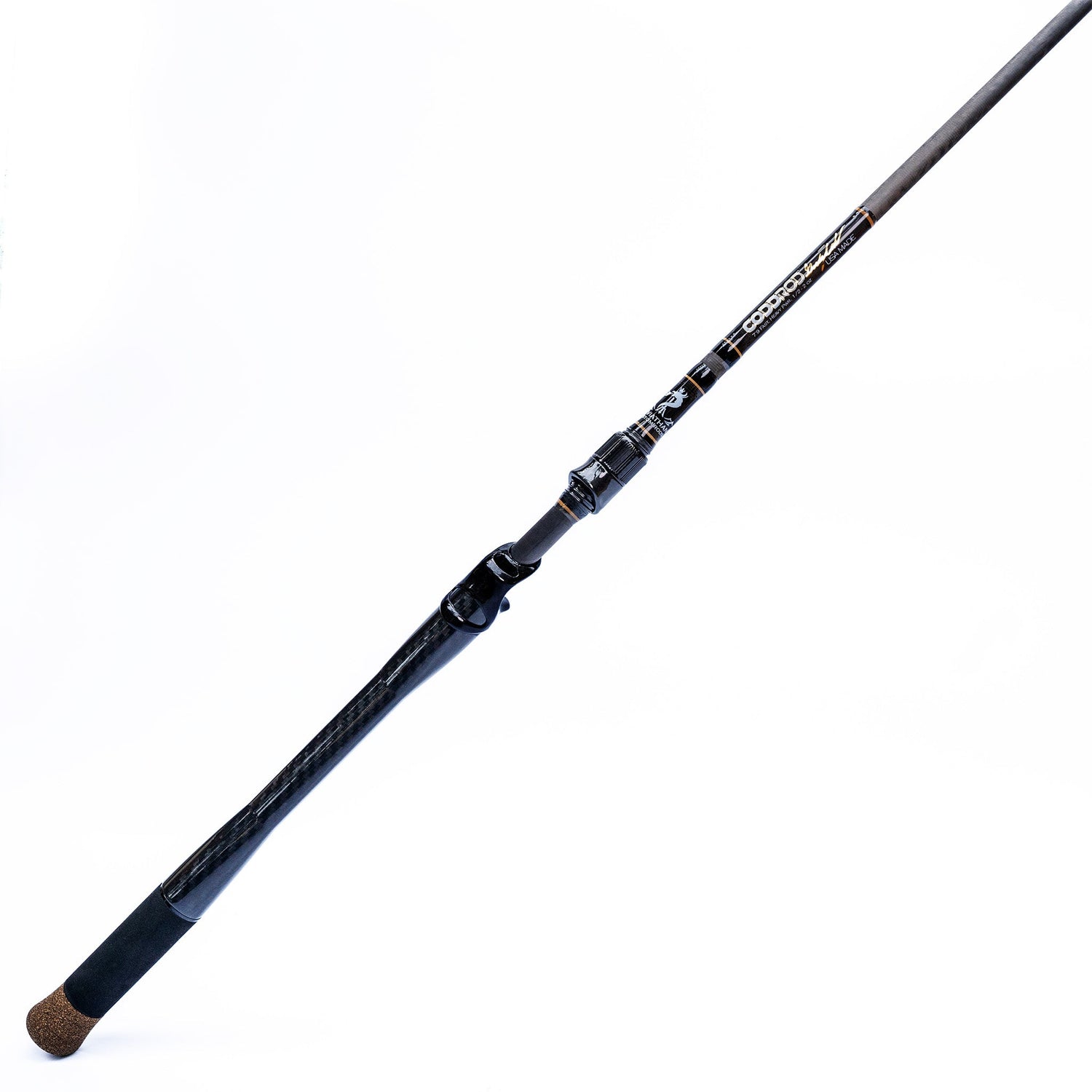
The CoddRod is a 7'7" fast-action powerhouse — rock solid yet featherlight — built to dominate a wide range of big fish applications. Whether you're locked in close-quarters combat with straight braid or bombing long-distance casts with swimbaits, its skeletonized carbon fiber frame and hyper-sensitive blank deliver unmatched strength, balance, and feel. Designed to be a true do-it-all machine, the CoddRod sets a new standard for anglers chasing trophy fish.
The CoddRod is built for anglers who want a more technical, performance-driven approach to swimbait fishing—combining control, stability, and sensitivity in a distinctive, purpose-built design.
Designed with a fast action, it delivers the power needed for controlled hooksets while maintaining the responsiveness required to stay connected to your bait.
This rod stands out—not just in how it performs, but in how it’s built.
Built for Versatility
Rated for ½–2oz baits, the CoddRod covers a wide range of applications:
- line-through swimbaits
- soft glides
- Alabama rigs
- mag spoons
- flipping and frog applications
Acid-Wrapped for Stability
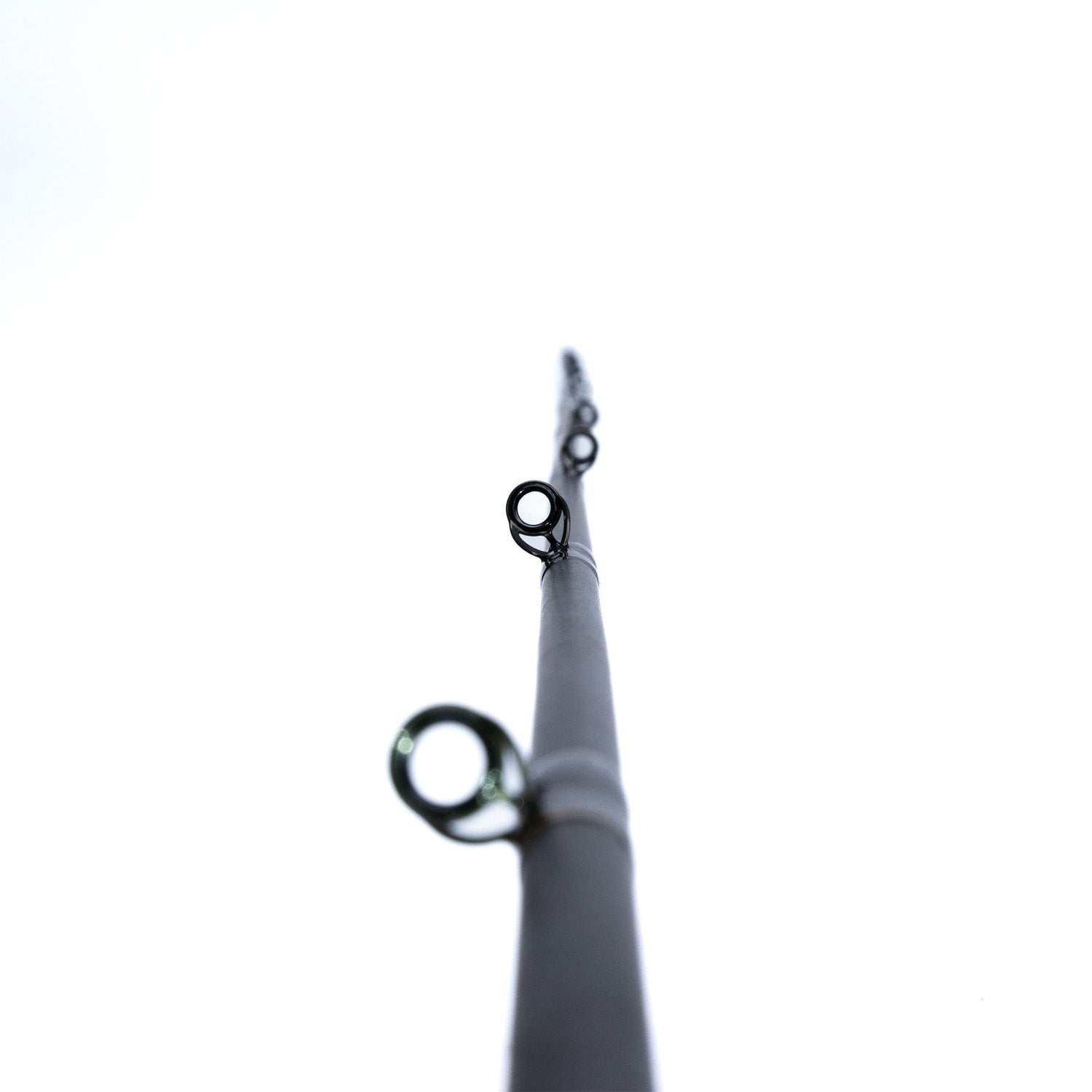
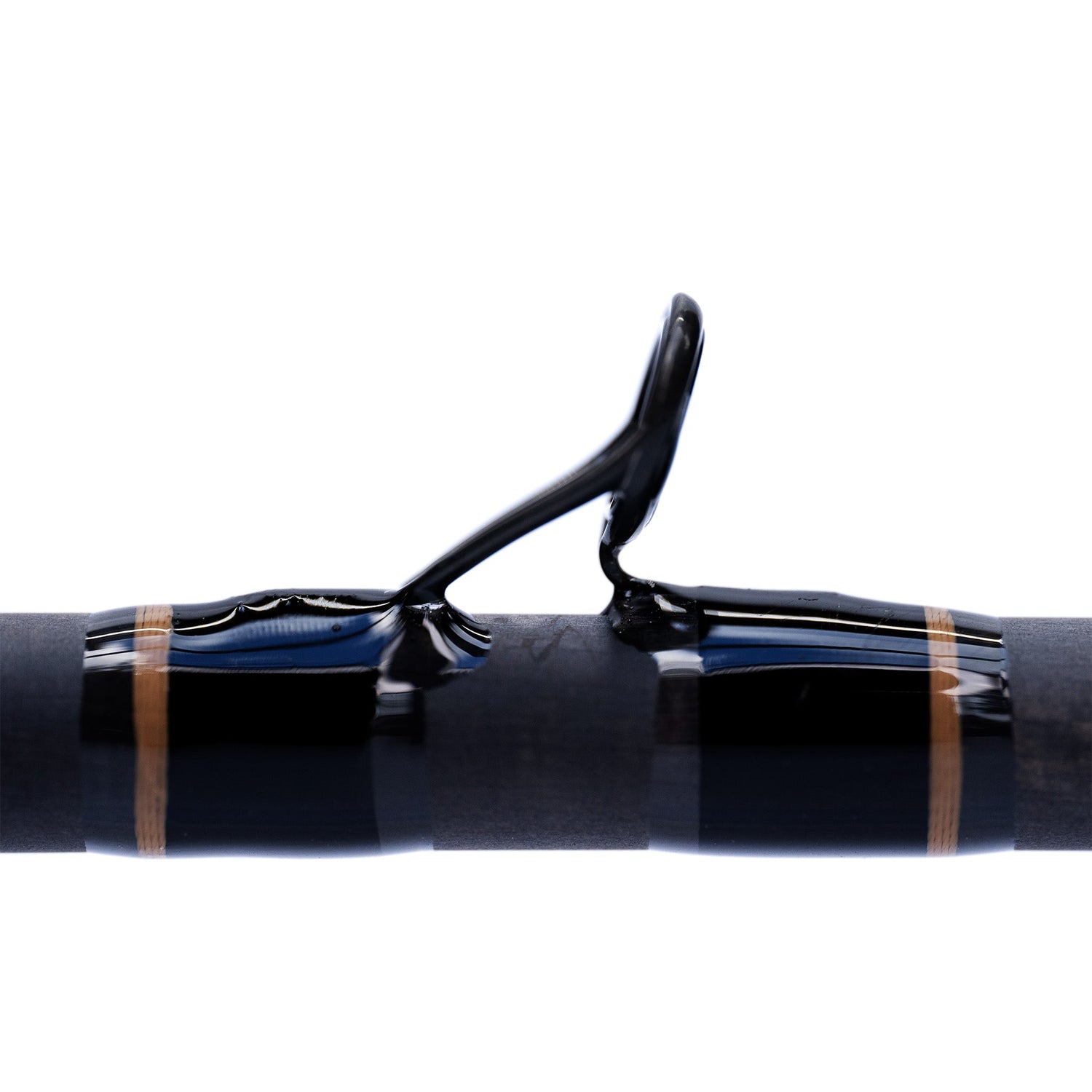
The CoddRod features acid-wrapped guides, repositioning the line under the rod.
This design:
- reduces torque under load
- improves balance when fighting fish
- increases control throughout the fight
Direct Contact, Increased Sensitivity
The CoddRod is designed to keep you connected to your bait.
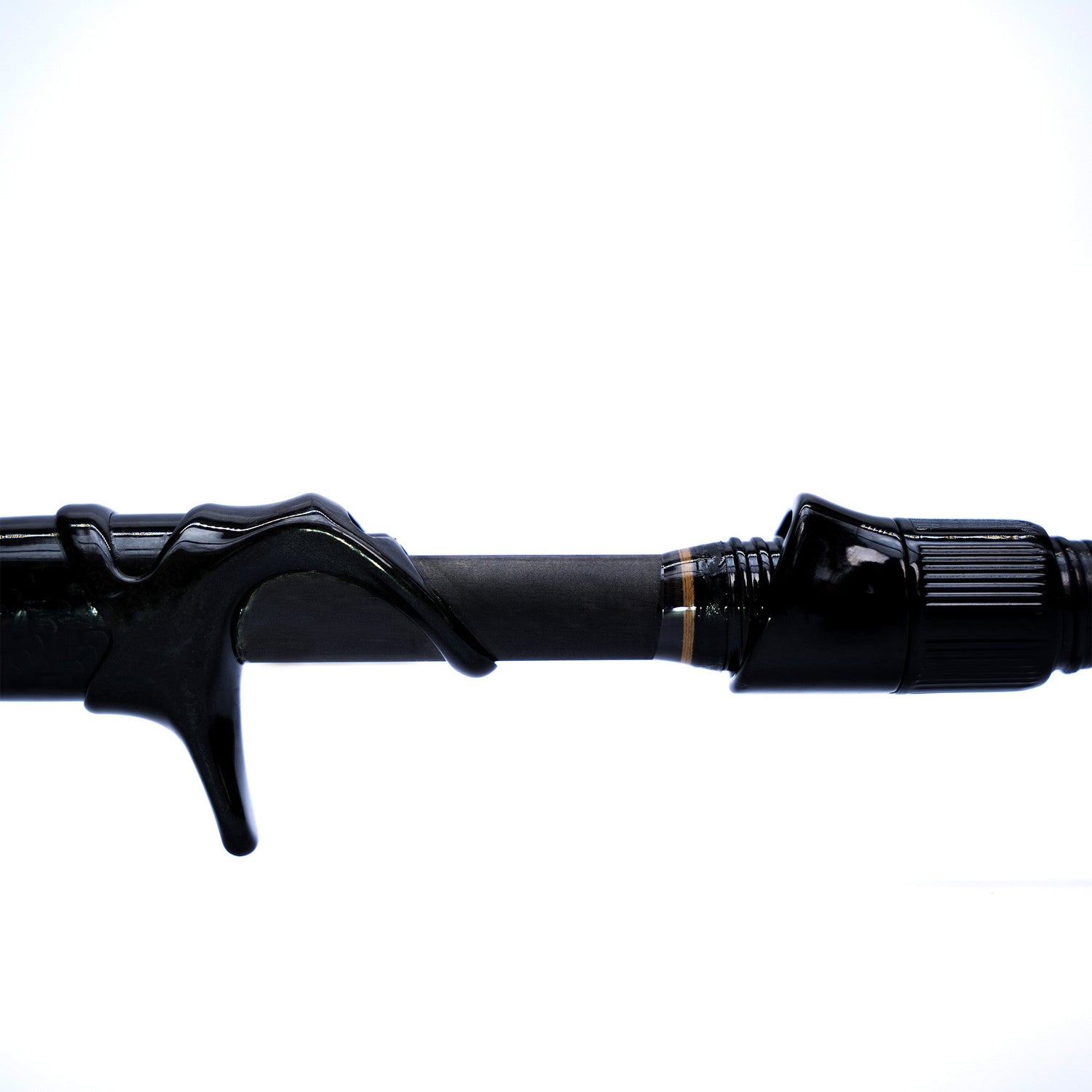
The exposed blank reel seat allows your hand to maintain direct contact with the blank—enhancing sensitivity and improving feedback throughout the retrieve.
Controlled Power
The fast action provides a more direct, controlled feel—allowing for confident hooksets and better command over the fish during the fight.
Built with Premium Components
Serious anglers care about components—and the CoddRod delivers both performance and presence.
- Built on a high-performance Toray carbon fiber platform developed with North Fork Composites, balancing responsiveness with durability.
- Equipped with Fuji K-Series double-foot guides, arranged in an acid-wrap configuration for improved performance under load.
- Features a glossy black compressed carbon fiber skeleton-style reel seat, designed to reduce weight while maximizing sensitivity through direct blank contact.
- Finished with a custom hybrid carbon fiber and EVA full grip, combining the lightweight feel and visual appeal of carbon fiber with the durability and comfort of EVA and cork at key contact points.
Why CoddRod
The CoddRod is built for anglers who want a more technical, responsive rod—without sacrificing power or durability.
Its unique construction delivers a combination of stability, sensitivity, and standout design that sets it apart from traditional swimbait rods.
*Coupons are not allowed for this special offer
Due to supply chain issues, actual parts or part colors may differ from pictures and/or descriptions
| Length | 7'7" |
| Applications | Flip/Frog, Line-Thru Swimbaits, Soft Glides, Alabama Rigs, Mag Spoon. |
| Power | Heavy |
| Action | Fast |
| Lure Weight | .5-2oz. |
| Line Weight | 12-25lbs |
| Blank Color | Hand-Sanded Naked Graphite |
| Pieces | 1 |
| Handle | 13” from Butt to Trigger |
CoddRod Swimbait Rod 7'7" Heavy Fast ½-2 oz